Brief
Project overview
The IBM i Modernization and Integration initiative extends the value of existing AS/400 and IBM i systems by making legacy applications, business logic, and data accessible through modern web technologies.
Traditional 5250 screens and rigid RPG reports often required specialized knowledge, multiple navigation steps, VPN access, and developer involvement for even minor changes. Reporting data was frequently exported or copied into spreadsheets, creating delays, duplicate work, and opportunities for error.
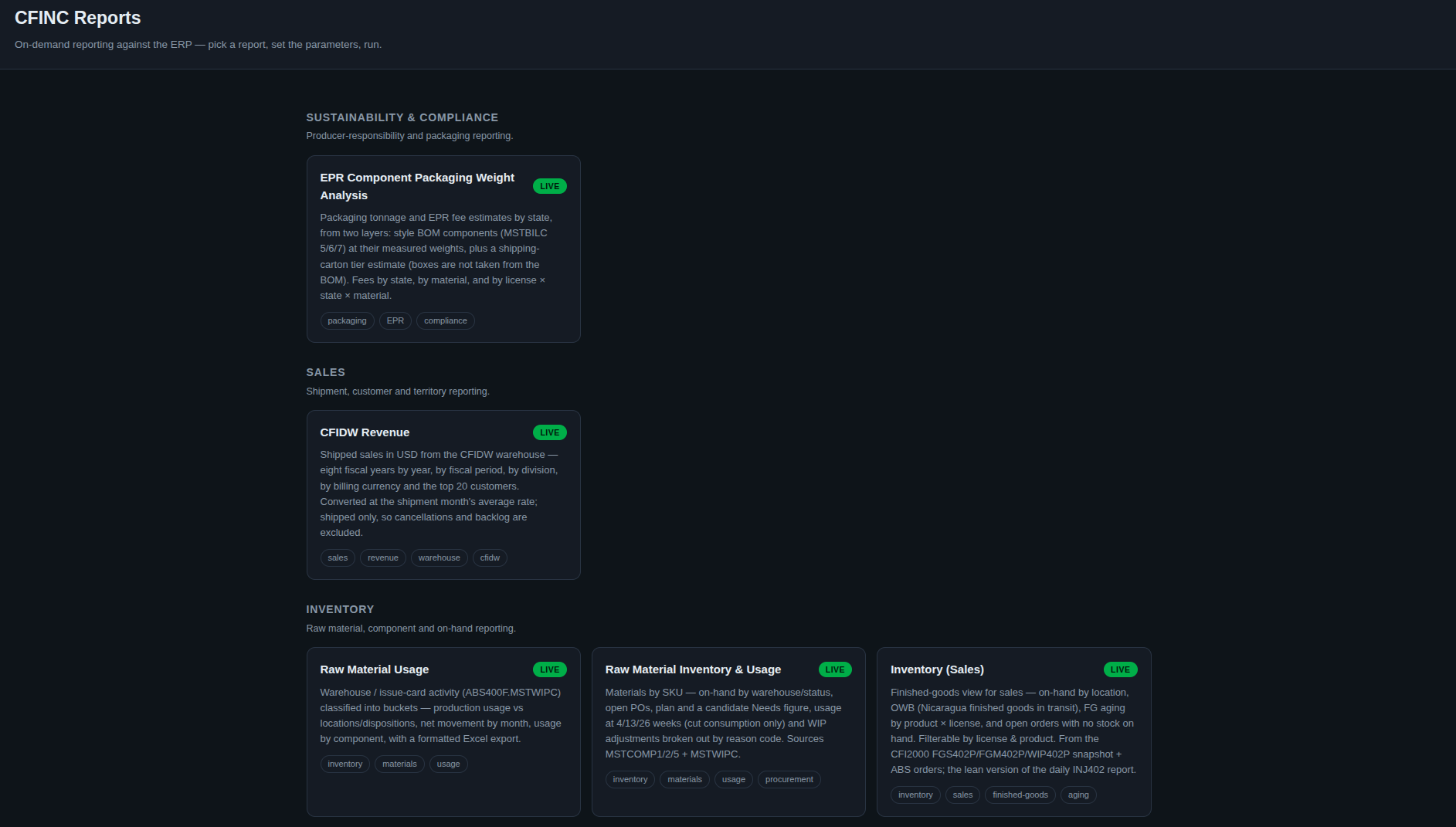
To address these limitations, I developed browser-based applications that operate directly against existing IBM i data and business processes. Users can access familiar functions through responsive interfaces designed for desktops, tablets, and mobile devices, without relying on terminal emulators or traditional VPN connections.
Secure APIs provide governed access to IBM i data for Power BI, Excel Power Query, web applications, and other enterprise systems. Flexible reporting tools allow users to filter, search, save views, and export information without requiring a developer to create a new report for every request.
The modernization approach preserves proven IBM i logic and data while improving usability, accessibility, integration, and reporting across the organization.
Key Capabilities
Modern browser-based interfaces for IBM i applications
Responsive access from desktops, tablets, and mobile devices
Secure remote access with identity-based authentication and MFA
REST APIs for Power BI, Excel, web applications, and system integrations
Flexible reporting with filters, saved views, pivots, and exports
JSON, CSV, and Excel output options
Role-based and field-level access controls
Full-text and faceted search across enterprise data
Audit trails for user activity and data changes
Integration with existing IBM i data, programs, and business logic
Business Impact
The initiative reduces the time required to complete routine work, gives users greater access to self-service reporting, improves data consistency, lowers training requirements, and extends the useful life of critical IBM i investments. It also creates a controlled modernization path that avoids the disruption and risk of replacing stable systems all at once.